

Best Watches for Small Wrists: What Actually Wears Well Under 38mm
Lug-to-lug length, case thickness, bezel width, and dial layout — not diameter alone — determine fit under 38mm. Five real picks, no marketing.
July 1, 2026Thirty-six to thirty-eight millimetres was the standard men's watch size for most of the twentieth century, and it's having a real moment again — not as a small-wrist workaround, but as a deliberate choice for anyone who wants a watch that clears a cuff, doesn't announce itself, and still reads confidently on the wrist. The catch: two watches stamped "38mm" can wear completely differently. A wide flat bezel, a generous dial opening, short lugs, and a thin case all push the same stated diameter toward a bigger — or smaller — visual footprint than the number suggests. This guide compares verified, currently sold 36–38mm watches across three budgets, explains what actually decides how each one wears, and names which one earns its place at every price point. Stated diameter gets you in the door. Everything else here gets you the right watch.
The best overall pick is the Longines Spirit 37mm (€2,450) if your budget stretches that far; the best value is the Citizen Tsuyosa 37mm (€299); and for dive-rated durability in a genuinely compact case, the Certina DS Action Diver 38mm delivers 300m water resistance for €895.
| Watch | Price band | Price | Diameter | Movement | Water resistance | Best for |
|---|---|---|---|---|---|---|
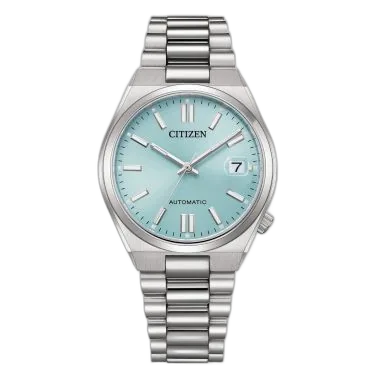
| Citizen Tsuyosa | Accessible | €299 | 37mm | Automatic (Cal. 8210) | 50m | Best value |
| HAMILTON Khaki Field Mechanical | Accessible | €625 | 38mm | Hand-wound (H-50) | 50m | Best everyday tool watch |
| Certina DS-1 | Accessible | €760 | 38mm | Automatic | 100m | Best dress-sport crossover |
| Certina DS Action Diver | Accessible | €895 | 38mm | Automatic (Powermatic 80) | 300m | Best sport/dive watch |
| Christopher Ward The Twelve | Mid-range | €1,155 | 38mm | Automatic (Sellita SW200-1) | 100m | Best integrated bracelet under €1,500 |
| NOMOS Glashütte Tangente | Mid-range | €2,220 | 37mm | Hand-wound (Alpha) | 30m | Best dress-leaning |
| Longines Spirit | Mid-range | €2,450 | 37mm | Automatic (Cal. L888.4, COSC) | 100m | Best overall |
| Tudor Black Bay One 36 | Premium | €4,320 | 36mm | Automatic (MT5400) | 100m | Best one-watch heritage pick |
| Rolex Oyster Perpetual 36 | Premium | Not published by Rolex | 36mm | Automatic (Cal. 3230) | 100m | Best icon / blue-chip pick |
Diameter is the number on the spec sheet; wrist presence is what you actually see and feel. Two watches at an identical 38mm can differ by several millimetres in lug-to-lug — the distance that actually determines whether a case overhangs your wrist — because one uses long, straight lugs and the other curves them tight to the case. Dial opening matters just as much: a slim bezel pushes the dial towards the case edge and reads larger than the diameter implies, while a wide bezel shrinks the visible dial and reads smaller and more restrained.
Thickness decides whether the watch disappears under a shirt cuff or catches on it. Case shape changes the visual math entirely — a cushion or tonneau case at 38mm can wear bigger than a round case at the same number. And on a bracelet, the end-link junction (how tightly the first link follows the lug) affects comfort and presence as much as the case itself. None of this makes 36–38mm a "small wrist" category. It suits anyone who wants a watch that fits under a cuff for the office, sits light after a full day on the wrist, or simply prefers the proportions that defined most watchmaking before cases crept toward 40mm-plus.
It's also the size band where vintage-inspired design language tends to look most correct, since that's the size these designs were originally drawn at.
At this budget, 36–38mm case options thin out fast — most brands' entry-level sports and field watches sit at 40mm or larger, so what does exist here has usually been sized deliberately rather than as a byproduct of a smaller movement.
Related guideWatches Under $1,000 →
Best for: the lowest entry point into a 37mm automatic bracelet watch.
The Tsuyosa (ref. NJ0200-50L) pairs a stepped, integrated-look steel bracelet with the in-house Cal. 8210 automatic — a 42-hour, date-equipped movement — for €299. An integrated-bracelet aesthetic and a manufacture movement at this price are unusual: most of Citizen's own lineup at this cost runs 40mm-plus, which makes the 37mm Tsuyosa a genuine outlier.
Watch-outs: 50m water resistance is splash-only, and Citizen doesn't publish a lug-to-lug figure for this reference.
Best for: a genuine field watch you wind every morning.
The H69439411 pairs a hand-wound H-50 movement — 80 hours of reserve — with a 38mm steel case and a textile strap, for €625. That reserve means it survives a weekend off the wrist without needing a reset, and hand-winding keeps the case slim for the diameter.
Watch-outs: 50m water resistance is splash-only, and the stock textile strap is fine but many owners upgrade it quickly.
Best for: one bracelet watch that works in the office and on a weekend.
The C0292071104100 pairs an automatic movement with 100m water resistance and a steel case and bracelet, for €760. That water resistance and an everyday-durable case cover most real scenarios without a second thought.
Watch-outs: dial and handset are plain rather than distinctive — this is a competent generalist, not a conversation starter.
Best for: a genuine dive watch that doesn't wear like a 44mm tool piece.
The C0328071105100 pairs a Powermatic 80 automatic with 300m water resistance in a 38mm steel case, for €895. 300m water resistance in a genuinely compact case is a real dive-watch credential, not a marketing number.
Watch-outs: dial furniture is functional rather than refined, and bezel alignment is worth checking on arrival, as with any tool watch at this price.
This is where 36–38mm gets genuinely interesting: COSC-certified movements, manufacture calibers, and increasingly, integrated-bracelet designs sized correctly instead of scaled down from a 40mm original.
Best for: an integrated bracelet without a luxury price tag.
The Twelve's faceted case is genuinely integrated — no separate lugs — built around a Sellita SW200-1 automatic with a date function and 100m water resistance. Our catalogue lists the 38mm on a rubber strap at €1,155; the same case is also available on its matching steel bracelet at a higher price. Christopher Ward added the 38mm size to the permanent collection specifically because the original 40mm ran large for a lot of buyers.
Watch-outs: an automatic integrated-bracelet watch at this price involves real trade-offs in bracelet finishing versus the premium options later in this guide — treat it as excellent value, not as parity with a luxury integrated-bracelet watch.
Related guideIntegrated-Bracelet Watches →
Best for: the purest dress-watch case proportions in this guide.
Ref. 164 pairs Nomos's hand-wound, in-house Alpha caliber — 43 hours of reserve — with a 37mm steel case and a Cordovan leather strap, for €2,220. It's a case study in restraint: a manual movement keeps the case slim, and the dial carries nothing beyond hands and hour markers.
Watch-outs: 30m water resistance means this is a desk watch — no showering, no swimming, and rain exposure should be brief. Thickness and lug-to-lug aren't published by Nomos for this exact reference, so try it on rather than assuming from the diameter alone.
Best for: one watch that covers office, weekend, and travel without a second thought.
Ref. L34104530 pairs the automatic Cal. L888.4 — COSC-certified with a silicon balance spring, 72 hours of reserve — with a 37mm steel case, a date function, and 100m water resistance, for €2,450. COSC certification, that reserve, and genuine water resistance is an unusually complete spec sheet at this price, and 37mm keeps it wearable under a cuff despite the sport-watch résumé.
Watch-outs: official thickness isn't published on Longines' own product page — if case height under a tight cuff is a hard requirement, verify in person before buying.
Extra spending here buys three things specifically: manufacture movements finished to a visibly higher standard, brand equity that protects resale value, and — in a couple of cases — genuinely integrated bracelet architecture that a sub-€2,000 watch can't replicate in the same materials.
Best for: a dive-watch heritage design in a genuinely compact case.
Ref. M79640-0001 pairs Tudor's in-house Cal. MT5400 — 70 hours of reserve — with a 36mm steel case and bracelet, 100m water resistance, and no date, for €4,320. It carries Black Bay's snowflake-hand design language and manufacture-movement architecture at 36mm rather than the line's more common 41mm — a real size option, not an afterthought variant.
Watch-outs: this is the steel-only COSC reference; steel-and-gold variants of the same 36mm case cost meaningfully more.
Best for: the most refined case finishing in this guide.
The SBGW301 pairs a hand-wound Cal. 9S64 — 72 hours of reserve — with a 37.3mm steel case, 11.7mm thick, on a black crocodile strap, officially priced at €5,200 (grand-seiko.com, Benelux). Zaratsu-polished steel and drilled, gently curved lugs on a 44.3mm lug-to-lug make this one of the cleanest translations of "37mm" into actual wrist presence in this guide — it replaces the previously catalogued SBGW231, which Grand Seiko has since discontinued.
Watch-outs: this reference is not in the 10h09 catalogue — confirm current availability and price with Grand Seiko directly. "Splash-resistant" is a real limitation, not modesty — this isn't a watch to wear in the shower or pool.
Best for: a luxury integrated-bracelet sport watch sized correctly rather than scaled down.
Ref. 81005-11S3320-1CM pairs the automatic manufacture Cal. GP03300 with a 38mm steel case and integrated bracelet, 10mm thick, 100m water resistance, officially priced at CHF 19,500 — about €20,600 converted at the September 2026 exchange rate, since Girard-Perregaux doesn't publish a EUR price directly. The octagonal bezel and fully integrated bracelet are Girard-Perregaux's own Genta-era design vocabulary, executed at 38mm instead of the 42mm most integrated-bracelet luxury sport watches default to.
Watch-outs: this reference is not in the 10h09 catalogue and Girard-Perregaux doesn't publish a power reserve figure for it — ask a boutique directly if either matters to your decision.
Best for: the watch with the least resale risk in this guide.
Ref. 126000 pairs the automatic manufacture Cal. 3230 — 70 hours of reserve — with a 36mm steel Oyster case and bracelet and 100m water resistance. 36mm is Rolex's own return to its historical Oyster Perpetual proportions, and the depth of the authorized-dealer and pre-owned market means resale value is unusually predictable for a watch at this price point.
Watch-outs: Rolex doesn't publish retail pricing on its own site in any market we checked — treat any number you see elsewhere as unconfirmed until an authorized dealer quotes it directly.
One-watch ownership: the Longines Spirit 37mm is the strongest single answer — COSC-certified, 100m-rated, and versatile enough for a suit or a weekend. If budget is the constraint, the Certina DS-1 covers the same ground for a third of the price.
Office: anything on a bracelet under about 11mm thick works under a cuff — the Certina DS-1, Christopher Ward The Twelve, and Nomos Tangente 38 all qualify.
Travel: no watch in this exact 36–38mm band currently ships with a true GMT complication that we could verify as in production — GMT movements need room most brands don't build into cases this compact. If a dedicated travel watch matters more than staying under 38mm, our GMT budget guide covers the right size range for that function specifically.
Water: the Certina DS Action Diver 38mm is the deepest-rated watch in this guide at 300m.
Formal wear: the Nomos Tangente 38 and Grand Seiko SBGW301 are built as dress watches first — both are splash-resistant only, so they're for the office and evenings, not the pool.
Enthusiast appeal: the Tudor Black Bay One 36, Grand Seiko SBGW301, and Girard-Perregaux Laureato 38mm all use manufacture movements and finishing techniques — Zaratsu polishing, in-house calibers — that a sub-€1,000 watch simply can't match.
Related guideOffice Watches →
The single millimetre between these numbers matters less than how each brand spends it. A 36mm case with a narrow bezel and long lugs can wear larger than a 38mm case with a wide bezel and tight lugs — the Hamilton Khaki Field Mechanical, for instance. As a starting frame: 36mm suits smaller wrists and dress-forward proportions most consistently; 37mm is the size where brands most often chase a deliberately "correct vintage" look; 38mm is where a genuine sports or tool watch — a dive watch, a field watch — starts to have room for real specifications, like 300m water resistance, without leaving the compact-case category.
Use the table's diameter and water-resistance figures alongside the individual watch sections above, not the diameter column alone, to judge actual fit — and see our guide on measuring your wrist and choosing case size if you're not sure where you land.
For most buyers, the Longines Spirit 37mm is the answer at €2,450: COSC certification, 100m water resistance, and a case that wears correctly under a cuff. It's the closest thing here to a single-watch solution.
Take the Citizen Tsuyosa if budget is the hard constraint; the Certina DS Action Diver 38mm if you actually swim or dive; the Christopher Ward The Twelve if an integrated bracelet matters more than a manufacture movement; and the Tudor Black Bay One 36, Grand Seiko SBGW301, or Rolex Oyster Perpetual 36 if brand equity, finishing, and resale confidence are worth the step up in price.
The decision rule is simple: check the lug-to-lug and thickness figures above against your own wrist, decide whether you actually need dive-rated water resistance or just want the look, then choose the option whose answers to those two questions match your daily life. Everything else in this guide is preference. Take the seven-question quiz to find watches that are genuinely built for your fit.
“Diameter tells you what fits in the box it shipped in. It doesn't tell you how the watch sits on your wrist.”
Not by historical standards — 38mm was a standard, often large, men's watch size for most of the twentieth century. It only reads as "small" relative to the 40–44mm sizing that became common from the 2000s onward. On most wrists, a well-designed 38mm watch reads as normally sized, not compact.
36mm works comfortably on wrist circumferences from roughly 15–18cm, and can suit larger wrists too if the design — narrow bezel, longer lugs — is chosen deliberately for a bigger presence. Lug-to-lug matters more than circumference alone; see our guide on measuring your wrist and choosing case size for the full method.
Yes, with real caveats. The Certina DS Action Diver 38mm in this guide is rated to 300m, proving it's possible — but the category is thin, since most dive watches default to 40mm-plus for bezel grip and legibility. Expect fewer options at this size than at 42mm-plus.
For most adult wrists, yes — it's versatile enough for the office, travel, and casual wear, and it's the size range most classic and vintage-inspired designs were originally drawn at. It's not the right choice if you specifically want a dive watch with maximum bezel grip, a chronograph with three-subdial legibility at a glance, or the largest possible dial presence — those use cases genuinely benefit from more diameter.
Lug-to-lug length, case thickness, bezel width, and dial layout — not diameter alone — determine fit under 38mm. Five real picks, no marketing.
July 1, 2026For a 17cm wrist, the safest watch size is usually around 36–40mm with a lug-to-lug around 44–48mm. Here's how to judge what will actually wear well.
August 25, 2026Caller vs. true GMT explained, with verified picks from Seiko, Christopher Ward, and Mido split across a €1,500 and a €3,000 travel-watch budget.
July 27, 2026Verified 38mm-40mm watches from €310 to €5,500: sizes, prices and honest trade-offs from Seiko, Tissot, Hamilton, Longines and Grand Seiko.
September 26, 2026