OMEGA · ~$6,588
Seamaster Diver 300m
A Master Chronometer-certified movement, resistant to magnetic fields up to 15,000 gauss — the dive watch James Bond made famous, still earning its reputation on specs.
Omega and Tudor both trace back to Rolex-adjacent manufacturing roots, but they've built distinct identities: Omega leans on space and dive heritage with chronometer-certified movements, Tudor on manufacture-grade engineering at a friendlier price. The right choice comes down to what you're actually paying for — the name or the mechanism.
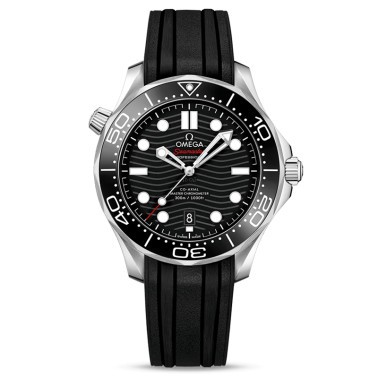
OMEGA · ~$6,588
Seamaster Diver 300m
A Master Chronometer-certified movement, resistant to magnetic fields up to 15,000 gauss — the dive watch James Bond made famous, still earning its reputation on specs.
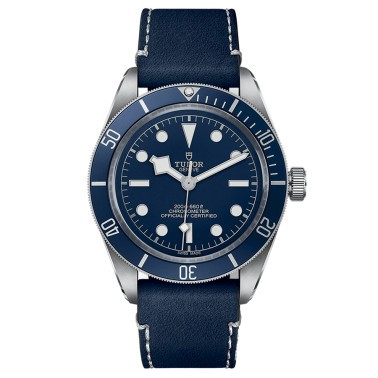
Tudor · ~$4,417
Black Bay 58
A 39mm case that restores vintage Submariner proportions, with a manufacture movement and 70-hour power reserve at roughly a third less than the Omega above.
Both brands build genuine in-house and manufacture-grade movements — the real difference is in certification, positioning, and what you're paying extra for.
| Omega | Tudor | |
|---|---|---|
| Founded | 1848 | 1926 |
| Ownership | Swatch Group | Rolex family-owned |
| Movement certification | Master Chronometer (METAS) | None — in-house testing only |
| Signature dive reference | Seamaster Diver 300M | Black Bay 58 |
| Entry price (this catalog) | ~€6,100 | ~€3,970 |
The quiz's brand-affinity question groups Omega under "heritage maisons" and Tudor under "Swiss mid-tier" — answer honestly about whether prestige recognition or spec-for-price value matters more to you, and the engine weights the rest of your matches accordingly.
Not mechanically — Tudor's manufacture calibers (developed partly with Breitling and Kenissi) are comparable engineering to Omega's Co-Axial movements. The gap is in certification and brand prestige: Omega's Master Chronometer status is independently verified by METAS, while Tudor relies on in-house testing.
Both hold value reasonably well among mainstream Swiss brands, but this varies by specific reference and market conditions — treat any resale claim as a snapshot, not a guarantee, and buy for what you'll wear, not what you might resell.
No — Omega's Co-Axial movements are developed in-house within the Swatch Group, while Tudor's manufacture calibers are developed independently (with some collaboration history with Breitling via Kenissi). Despite the shared Rolex-adjacent lineage, the two brands' movements are not interchangeable.