Junghans Max Bill: Quartz vs Automatic vs Hand-Wound
One Bauhaus dial, three engines. Case size, thickness, date and price all shift across the Max Bill range — here is which movement to buy.
September 6, 2026At a glance, the Junghans Max Bill says very little: a round steel case, a slim bezel and a dial that seems to occupy nearly all the space. The meaningful question is not whether that restraint is good design, but whether its calm, dial-first presence fits the way you dress and the way you want a watch to feel on the wrist.
The Max Bill matters because its premise is unusually direct. Junghans introduced Max Bill's wristwatch designs in 1961, and the current mechanical collection still carries that disciplined idea forward: a watch organised around proportion, legibility and the relationship between marks on a dial rather than complication or display.
Max Bill was Bauhaus-trained, so this is more than a modern watch borrowing a convenient visual language. That connection will matter if you care about where an object's design comes from and want its history to remain visible in daily use. It will matter far less if you are looking for mechanical spectacle, visible luxury codes, engineering novelty or a watch that immediately signals prestige to people across the room.
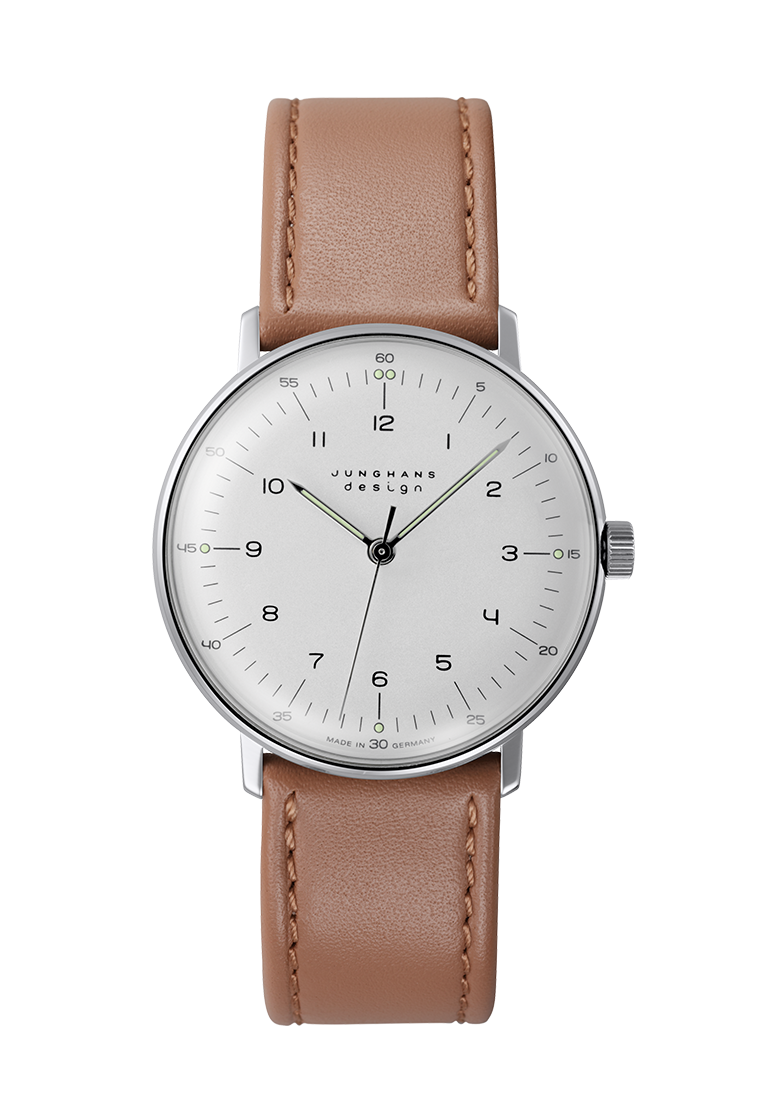
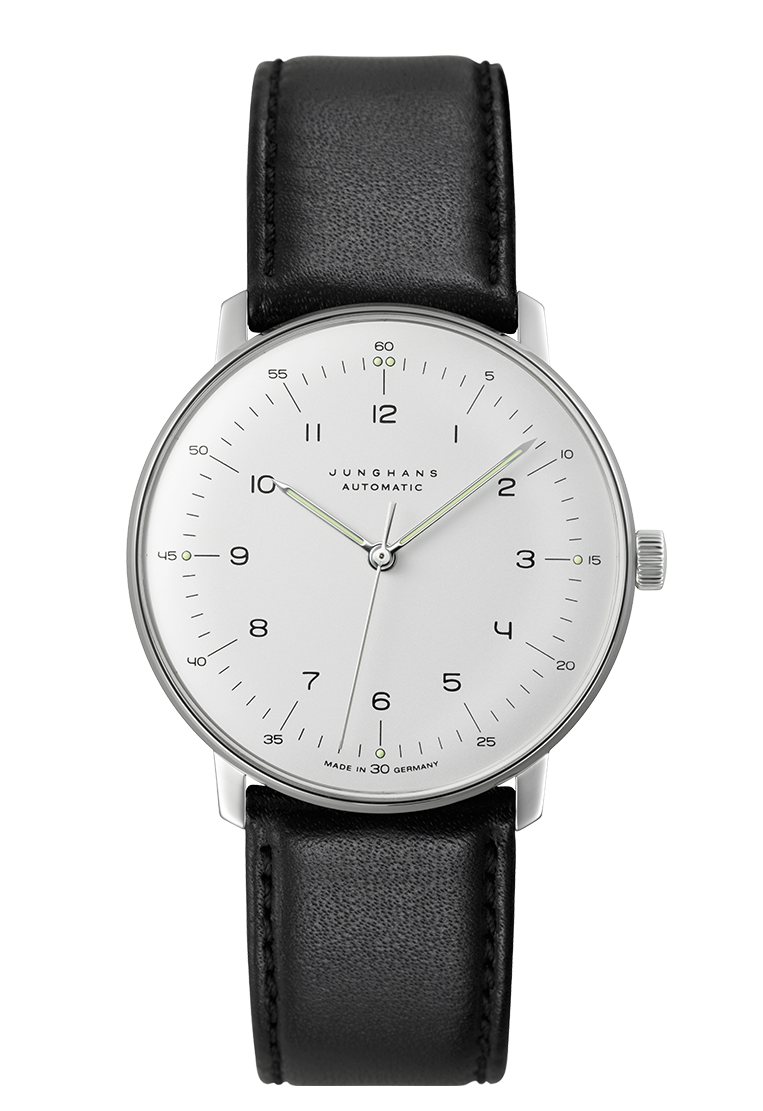
The case is round and the bezel exceptionally slim, which gives the Max Bill an unusual visual hierarchy: the dial is not framed as much as it is allowed to dominate. Arabic numerals, indices, hands and minute track are arranged as one graphic composition. Nothing competes for attention, yet the spacing and typography give the watch a character that is more deliberate than blank.
That differs from the sharper, more architectural discipline of a NOMOS Tangente. The Max Bill has softer geometry and lets its numeral-and-track layout do more of the visual work. It suits buyers who notice type, negative space and order in everyday objects. But the same clarity can read as empty, delicate or overly academic if you prefer textured dials, pronounced lume, bold colour, tool-watch cues, aged-looking details or decoration that makes a watch feel visibly substantial.
The 34 mm max bill Handaufzug is emotionally central to the collection. Its J805.1 hand-wound movement has a 42-hour power reserve, and winding it makes ownership slightly more intentional: you take the watch off, turn the crown and begin again. In this compact, slim-cased format, the no-date layout keeps the design especially direct.
The 38 mm max bill Automatic is the more practical choice if you like the same visual language but do not want winding and resetting to be part of your routine after a watch has sat unused. Its J800.1 automatic movement offers a 38-hour power reserve. Neither movement is a reason to buy a Max Bill for technical theatre or movement finishing; both are established workhorse movements. The decision is really about interaction, thickness, convenience and the amount of attention you want the watch to ask of you.
Related guideHand-Wound Watches →
At 34 mm across, the hand-wound Max Bill is deliberately compact. Its slim bezel and broad dial opening make the face read more openly than the diameter alone suggests, while the thin case slips easily beneath a cuff. It is particularly persuasive for smaller to medium wrists and for anyone who wants a watch to accompany an outfit rather than dominate it.
The 38 mm automatic gives the design a more conventional contemporary footprint. It is the better route if you want automatic convenience and more visual presence, without abandoning the collection's quiet proportions. Still, the 34 mm is not secretly a large watch: buyers accustomed to 40 mm-plus sports watches may find it too small or too light, even after allowing for the expansive dial. That is not a sizing flaw; it is a clear indication that the Max Bill is asking for a different relationship with scale.
Related guideWatches for Small Wrists →
The Max Bill works especially well with creative-professional dress codes, clean smart casual, knitwear, shirts, relaxed tailoring and unstructured jackets. It suits wardrobes built around considered shapes and materials rather than visible luxury signals. The round case and graphic dial let it feel at home in design, cultural and professional settings without making every outfit feel formal.
It is less persuasive with hard-use outdoor clothing, overtly sporty wardrobes or rugged denim-and-boot combinations when you want the watch to match that toughness. It can also disappear beside garments that demand a large, assertive wrist presence. The Max Bill does not turn a utilitarian look into a design statement by force; it works best when the rest of what you wear already leaves room for quietness.
Related guideDress Watches →
The Max Bill makes the strongest case for four kinds of buyer: the design-story believer who wants a visible connection to modern design history; the quiet-dress professional who values taste without status signalling; the slim-watch wearer who prioritises comfort, modest dimensions and an easy fit beneath a cuff; and the ritual-oriented owner who enjoys winding a mechanical watch and making ownership tactile. For each of them, the watch's restraint is not an absence of personality but the personality itself.
It makes less sense for three other buyers: the sports-watch buyer seeking toughness, water-oriented confidence, bezel presence or all-terrain character; the spec-driven value hunter focused on movement complexity, long power reserve, high water resistance, bracelet heft or visible engineering; and the big-watch wearer who wants substantial weight and an assertive footprint. None of those preferences is wrong. They simply ask the wristwatch to do something the Max Bill was not designed to do.
Choose the 34 mm max bill Handaufzug if you want the leaner, more interactive expression of the idea and will genuinely enjoy winding it. Its compact case, slim profile and no-date dial make it the clearest choice for someone who wants the watch to remain quiet and close to the original mechanical proposition.
Choose the 38 mm max bill Automatic if daily convenience matters more and you want a more contemporary amount of wrist presence. It retains the collection's design-led approach while asking less of your routine. In either form, buy the Max Bill when calmness reads as confidence and visual clarity feels sufficiently expressive. Skip it if you need your watch to look muscular, technically busy, overtly luxurious or visually loud.
Not sure whether that restraint suits your wrist and your wardrobe? Take the seven-question quiz to see which watches genuinely fit the way you dress and wear them.
Related guideWatches Under $2,500 →
“Buy the Max Bill when restraint feels expressive to you, not when you need a watch to announce itself.”
Core mechanical Max Bill watches are available in both forms. The 34 mm Handaufzug suits buyers who enjoy a daily ritual and want a thinner, more traditional expression; the 38 mm Automatic suits those who prioritise convenience. Check the exact product record for its date layout and other reference-specific details.
Its slim bezel and dial-first design make the 34 mm watch feel visually open, so the number alone does not tell the whole story. It is still deliberately compact and will suit buyers who enjoy restrained proportions. Larger-wristed buyers, or anyone used to 40 mm-plus sports watches, may prefer the 38 mm Automatic.
Junghans is a German, design-led watchmaker with deep historical roots, rather than a status-led Swiss prestige proposition. A Max Bill buyer is typically paying for design pedigree, proportion and a particular kind of quiet daily wear, not for social signalling or high-horology movement finishing.
It has a direct Bauhaus connection: Max Bill was Bauhaus-trained and created the Junghans wristwatch designs introduced in 1961. That makes the collection more than a contemporary Bauhaus-style interpretation, without diminishing the legitimacy of other watches influenced by modernist design.
One Bauhaus dial, three engines. Case size, thickness, date and price all shift across the Max Bill range — here is which movement to buy.
September 6, 2026The NOMOS Tangente isn't a universal crowd-pleaser. Here's who its Bauhaus design and hand-wound character actually suit, and who should look elsewhere.
July 12, 2026