Very Thin Mechanical Watches: The Best Ultra-Thin Watches by Budget in 2026
A thin watch is not a number. It is the feeling of a case that disappears under a shirt cuff, a dial that sits flat against the wrist, and a weight that you stop noticing by mid-morning. The mechanical movement inside — hand-wound, self-winding, or micro-rotor — keeps the soul of the thing, but the pleasure of a genuinely slim watch is almost entirely physical. The problem with most "thinnest watches" articles is that they answer a question nobody actually asks: record-holders like Bulgari's 1.70mm Octo Finissimo Ultra are engineering marvels, but they are limited editions, cost as much as a house, and demand near-museum care. What most buyers want to know is simpler — what is the thinnest mechanical watch you can realistically buy within your budget, and will you actually enjoy wearing it? This guide answers that question tier by tier: what makes each watch thin mechanically, how it wears, what it costs to own, and who it genuinely suits, including the trade-offs the spec sheets gloss over.
The strongest value pick is the Hamilton Khaki Field Mechanical (€625, 9.5mm) under €2,000; the NOMOS Tangente neomatik is the most practical thin automatic for everyday wear; and the most significant new ultra-thin movement of 2026 is Vacheron Constantin's Calibre 2550 — a 2.4mm micro-rotor automatic with an 80-hour reserve, inside the boutique-exclusive Overseas Self-Winding Ultra-Thin.
What counts as very thin?
There is no official industry standard for "thin" or "ultra-thin" — the words mean whatever a brand's marketing department wants them to mean. Here are the practical editorial thresholds we apply consistently throughout this guide, all measured as total case thickness from the top of the crystal to the back of the case: under 10mm is slim for a modern mechanical watch, comfortable under most cuffs. Under 8mm is genuinely thin — this is where thinness stops being an accident of design and becomes an engineering decision. Under 6mm is ultra-thin territory, where case, movement, crystal, and caseback have all been deliberately rethought. Under 4mm is engineering-showcase territory: watches built to prove something, with daily wearability a secondary consideration.
Two clarifications before we start. Case thickness is not movement thickness: the Bulgari Octo Finissimo Automatic, for example, has a case just 5.15mm tall but a movement only 2.23mm thick — the missing millimetres are crystal, dial, and case architecture. When a brand quotes a heroic figure, check which number it is quoting; we state case thickness for every watch below and note movement thickness where it matters.
Thin is also not the same as small, and thin is not automatically comfortable. A 40mm case that is 5mm tall can feel wider on the wrist than a 36mm case that is 9mm tall. Diameter, lug-to-lug distance, lug curvature, caseback shape, crown size, the profile of the domed crystal, bracelet integration, and how deep the dial sits below the crystal all shape how a watch actually wears. A flat, slab-sided ultra-thin watch with straight lugs can press into the wrist more than a thicker watch with a curved caseback and downturned lugs — the difference between buying a statistic and buying a watch.
Manual-wind, automatic, and micro-rotor: the three routes to thin
There are three ways to make a mechanical watch thin, and each has trade-offs worth understanding before you spend money. Manual-wind (hand-wound): no rotor is needed, so the movement can be built on a single, very flat plane — the thinnest watches in the world are almost all hand-wound. The cost is that you must wind the watch yourself, usually every day or two, and a crown on a very thin case can feel small in the fingers.
Full-rotor automatic: a conventional oscillating weight spins around the top of the movement and winds the mainspring. It is convenient, but the rotor alone can add 1–2mm of height, so full-rotor ultra-thin watches require creative case design to stay slim.
Micro-rotor (and peripheral rotor): a small, dense weight — usually platinum or gold — is sunk into the mainplate itself and winds the movement bidirectionally. You keep automatic convenience at close to hand-wound heights. The engineering is harder and the winding efficiency lower than a full rotor, which is why micro-rotor calibres tend to be more expensive and found in higher-end watches. Vacheron Constantin's new Calibre 2550, covered in detail below, is the cleanest worked example of the state of the art in 2026.
Quick comparison: very thin mechanical watches by budget
| Watch | Approx. price (EUR) | Case size | Thickness | Movement, winding | Water resistance | Best for |
|---|---|---|---|---|---|---|
| Hamilton Khaki Field Mechanical | €625 | 38mm | 9.5mm | H-50, manual, 80h | 50m | Slim, tough everyday wear |
| Junghans Max Bill Handaufzug | from €1,175 | 34mm | 9.0mm | J805.1, manual | 50m | Classic Bauhaus dress styling |
| Junghans Meister Handaufzug | €1,590 | 37.7mm | 7.3mm | J815.1, manual | 50m | Genuinely thin hand-winder under €2,000 |
| NOMOS Tangente neomatik 39 | €3,400 | 38mm | ~6.9–7.2mm | DUW 3001, automatic | Splash-proof | Thin automatic with in-house movement |
| Chopard L.U.C XPS 1860 (steel) | €12,900 | 40mm | 7.2mm | L.U.C 96.03-L, automatic, 65h | 30m | Entry to haute-horlogerie thinness |
| Jaeger-LeCoultre Master Ultra Thin Date | €10,400 | 39mm | 7.8mm | Cal. 899, automatic | 50m | First luxury ultra-thin watch |
| Bulgari Octo Finissimo Automatic | €17,700 | 40mm | 5.15mm | BVL 138, automatic, 60h | 30m | Integrated-bracelet ultra-thin design |
| A. Lange & Söhne Saxonia Thin | On request (~€27,000) | 39mm | 6.2mm | L093.1, manual, 72h | Not rated | Movement-and-finishing collector |
| Piaget Altiplano Ultimate Automatic 910P | ~€33,000–35,000 | 41mm | 4.3mm | Cal. 910P, automatic | 20m | Design-led ultra-thin statement |
| Vacheron Constantin Overseas Self-Winding Ultra-Thin | Price on request | 39.5mm | 7.35mm | Cal. 2550, automatic, 80h | 50m | Modern ultra-thin luxury-sports format |
| Bulgari Octo Finissimo Ultra COSC | ~€600,000 | 40mm | 1.70mm | BVL 180, manual, 50h | 0m | Record-setting engineering landmark |
| Richard Mille RM UP-01 Ferrari | CHF 1.7M excl. tax | 51×39mm | 1.75mm | RMUP-01, manual, 45h | 10m | Extreme engineering and status |
Prices above reflect the 10h09 catalogue where a watch is listed there, and current official or press-reported pricing otherwise — several figures (Chopard, NOMOS, Junghans Meister) have been corrected upward from earlier estimates to match current list prices. On request and boutique-exclusive watches carry no fixed public price; treat the figures shown as market context, not a quote.
The best very thin mechanical watches under €2,000
Genuine haute-horlogerie ultra-thin construction does not exist at this price — a 5mm case with a hand-finished in-house movement simply cannot be built for four figures. What you can buy is a properly slim mechanical watch with honest engineering and real design pedigree. These are the credible options, and two of them are hand-wound for a reason: removing the rotor is the cheapest and most effective way to make a movement thin.
Related guideUnder $2,500 →
Hamilton Khaki Field Mechanical — the slim tool watch
Why it belongs here: most "thin watch" lists ignore field watches, yet this faithful recreation of a 1960s military watch is thinner than many dress watches — 9.5mm — while offering lume, legibility, and real durability.
Key specifications: 38mm stainless steel case, 9.5mm thick, 47mm lug-to-lug; Hamilton H-50 hand-wound movement with an unusually long 80-hour power reserve; 50m water resistance; 20mm lug width; €625 on the official EU site.
What it wears like: compact and light on a NATO strap, but note the 47mm lug-to-lug — it wears longer than the case diameter suggests.
Mechanically interesting: an 80-hour reserve in a 9.5mm hand-wound watch proves you do not need a thick case for a long-running movement.
Buyer type: the buyer who wants one slim mechanical watch that can also take a weekend outdoors.
Watch out for: it is a tool watch, not a dress watch; the NATO strap adds wearing height versus leather.

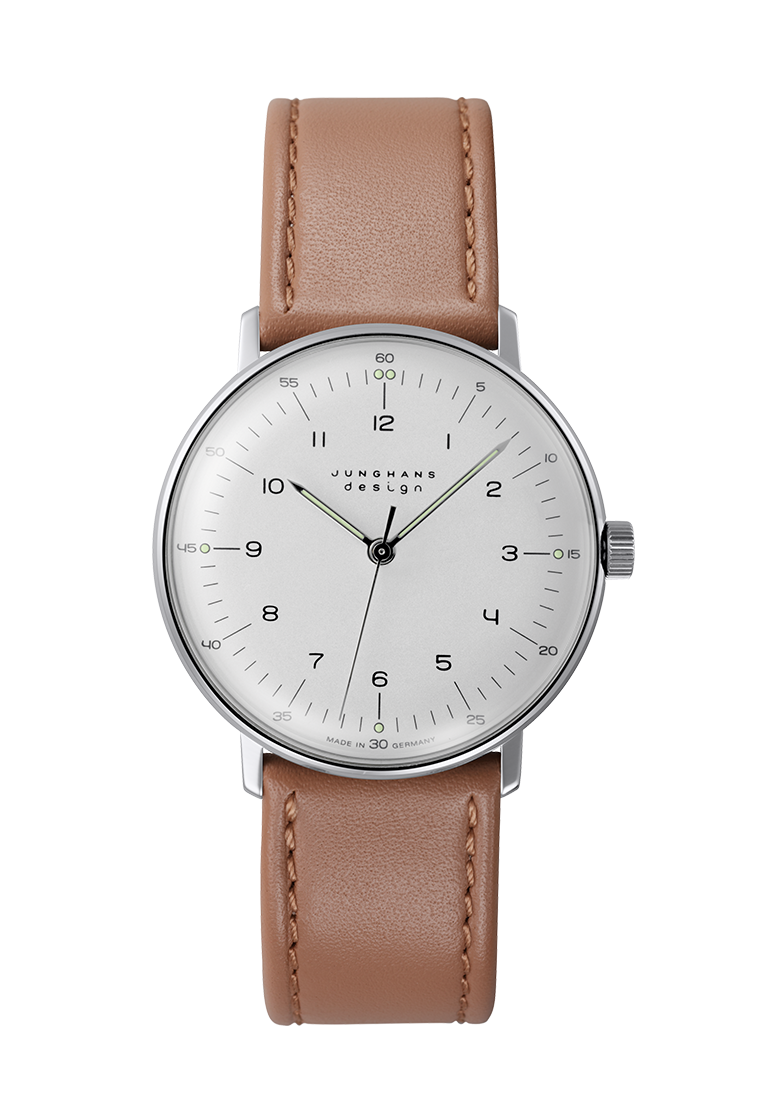
Junghans Max Bill Handaufzug — classic dress styling
Why it belongs here: Max Bill's 1961 design for Junghans remains one of the purest dial layouts ever drawn, and the hand-wound version is the slimmest watch in the Max Bill family.
Key specifications: 34mm stainless steel case, 9.0mm thick; calibre J805.1 hand-wound; roughly 42-hour power reserve; 50m water resistance; domed plexiglass crystal, with a sapphire retrofit available on request; from around €1,175 depending on dial.
What it wears like: light, low, and unobtrusive. The small case suits slim wrists perfectly and slips under any cuff. On wrists above about 17cm it starts to read as a compact watch.
Mechanically interesting: a simple, robust, hand-wound calibre that is thin because nothing is stacked on top of it — the honest route to slenderness.
Buyer type: the first-time mechanical dress-watch buyer, or anyone who wants timeless, understated design for a modest outlay.
Watch out for: hand-winding daily will be new to you if you are coming from quartz; the plexiglass crystal scratches more easily than sapphire, though it can be polished; 34mm is genuinely small by modern standards.
Junghans Meister Handaufzug — genuinely thin under €2,000
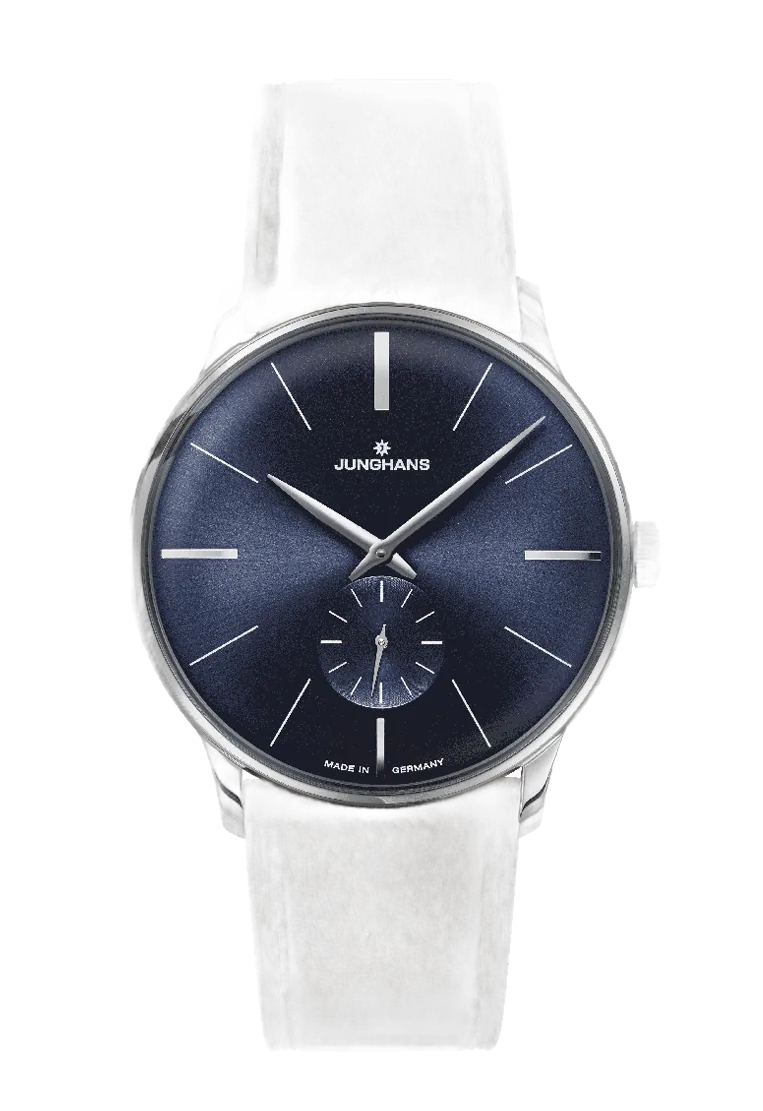
Why it belongs here: Junghans describes it as the flattest watch in the Meister range, and at a listed height of roughly 7.3mm it is the thinnest watch you can realistically buy for under €2,000.
Key specifications: 37.7mm stainless steel case, approximately 7.3mm thick; calibre J815.1 hand-wound, small seconds; about 42-hour power reserve; 50m water resistance; sapphire crystal; €1,590.
What it wears like: beautifully balanced — the 37.7mm diameter and off-centre small seconds give it a vintage dress proportion that suits almost every wrist.
Mechanically interesting: a domed, stepped case and hand-wound movement keep the profile low without any exotic construction — thinness achieved through restraint.
Buyer type: the buyer who wants true thinness, not just slimness, without leaving the accessible price bracket.
Watch out for: no date and no centre seconds; confirm the exact current case height and EU list price with Junghans or an authorised dealer before ordering.
Related guideHand-Wound Watches →
Section verdict: under €2,000
The strongest value choice is the Hamilton Khaki Field Mechanical — nothing else this thin with an 80-hour movement comes close to its price. The strongest classic dress-watch styling choice is the Junghans Max Bill Handaufzug, a design icon that will still look current in thirty years. And if pure thinness is the priority, the Meister Handaufzug is the segment's technical benchmark.
The best very thin mechanical watches from €2,000 to €10,000
This is where serious thin watchmaking begins. Between €2,000 and €10,000, three things improve materially: case finishing (polished bevels, curved casebacks, properly proportioned crystals), movement quality (in-house and manufacture calibres appear, with decorated bridges visible through sapphire casebacks), and the precision of the proportions — lugs get shorter and better curved, dials get more depth despite the slim case. You also get your first in-house ultra-thin automatic movements, which cost real money to develop.
NOMOS Tangente neomatik 39 — thin automatic, in-house movement
Why it belongs here: NOMOS's neomatik calibre DUW 3001 is just over 3mm thick — as flat as many hand-wound movements — yet it is a self-winding in-house calibre, developed in Glashütte.
Key specifications: 38mm stainless steel case (the "39" in the name refers to the product line, not the literal diameter), approximately 6.9–7.2mm thick depending on caseback; DUW 3001 automatic with roughly 43-hour power reserve; splash-proof water resistance — do not swim with it; €3,400.
What it wears like: exceptionally light and low; the straight lugs and flat caseback make it one of the most cuff-friendly watches made anywhere near this price.
Mechanically interesting: a thin automatic achieved by miniaturising every part of the winding system rather than by exotic materials.
Buyer type: the design-led buyer who wants genuine German watchmaking engineering and an honest price.
Watch out for: treat it as splash-proof only; hand-wound NOMOS models are cheaper still if you do not need the rotor.

Chopard L.U.C XPS 1860 (steel) — entry to haute-horlogerie thinness
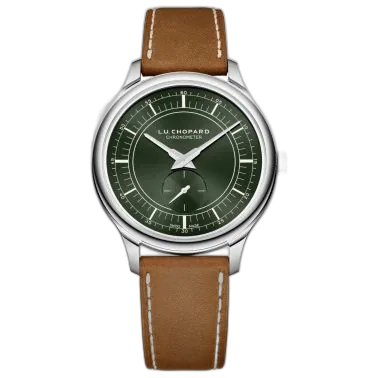
Why it belongs here: the XPS 1860 is where Geneva-level finishing meets a genuinely thin automatic movement, and the steel version is the most affordable way into Chopard's L.U.C manufacture calibres.
Key specifications: 40mm stainless steel case, 7.2mm thick; L.U.C 96.03-L automatic micro-rotor movement with twin stacked barrels, 65-hour power reserve; 30m water resistance; €12,900.
What it wears like: classic and composed — the dauphine hands and small seconds sit within a slim, well-curved case that works under formal cuffs.
Mechanically interesting: micro-rotor winding combined with two stacked barrels gives 65 hours of reserve from a genuinely thin movement — the same philosophy of "thin but long-running" that defines the very top of the market in 2026.
Buyer type: the buyer who wants movement pedigree and finishing well before wanting a brand name on the dial.
Watch out for: availability varies by year and market; 30m water resistance is modest; verify the exact current calibre reference and availability with Chopard before ordering.
One honest note about this bracket
There is no true ultra-thin integrated-bracelet watch under €10,000. The style is achievable — Tissot's PRX, for example — but an automatic PRX case is roughly 11mm thick: slim-looking, not actually thin. Real thinness in an integrated bracelet begins with Bulgari's Octo Finissimo, in the next tier up.
The best very thin mechanical watches from €10,000 to €30,000
This is the core enthusiast tier, and it splits into two distinct philosophies: the discreet round dress watch, and the sportier integrated-bracelet ultra-thin watch. Both are covered below, because they suit completely different owners.
Jaeger-LeCoultre Master Ultra Thin Date — best first luxury ultra-thin
Why it belongs here: Jaeger-LeCoultre has been making ultra-thin calibres since 1907 and remains the reference point for accessible luxury thinness. The Master Ultra Thin Date is currently the thinnest model in the Master collection.
Key specifications: 39mm stainless steel case, 7.8mm thick; self-winding calibre 899, just 3.3mm thick; date display at six o'clock; 50m water resistance; €10,400 in steel.
What it wears like: the template for a modern luxury dress watch — restrained, light, and balanced, with the sunray dial catching light from under a cuff.
Mechanically interesting: a genuinely thin automatic movement in a genuinely thin case, backed by Jaeger-LeCoultre's long ultra-thin heritage.
Buyer type: the first-time luxury-watch buyer who wants one watch that is thin, automatic, wearable daily, and produced by a manufacture rather than a marketing department.
Watch out for: the design is deliberately conservative; if you want visual drama, look at the Bulgari below.
Related guideDress Watches →

Bulgari Octo Finissimo Automatic — thin everyday watch with an edge
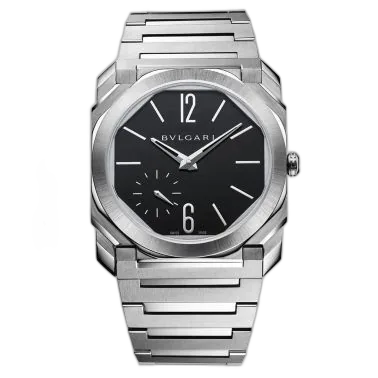
Why it belongs here: the Octo Finissimo Automatic is one of the thinnest self-winding watches in serial production — 5.15mm total — and it wears that achievement lightly, on a bracelet, every day.
Key specifications: 40mm sandblasted titanium case, 5.15mm thick; BVL 138 calibre, 2.23mm thick, with a platinum micro-rotor and roughly 60-hour power reserve; 30m water resistance; €17,700 on the titanium bracelet.
What it wears like: surprisingly substantial despite the height — titanium keeps it light, and the angular octagonal case gives it wrist presence a round dress watch cannot match. The integrated bracelet drapes well on most wrists.
Mechanically interesting: a 2.23mm micro-rotor automatic is serious haute horlogerie engineering, delivered in a design-led package.
Buyer type: the integrated-bracelet enthusiast or design-led buyer who wants maximum thinness with a contemporary, architectural look rather than a classical dress aesthetic.
Watch out for: 30m water resistance and sandblasted titanium that shows scuffs; the octagonal case is polarising — try one on before buying.
Related guideIntegrated-Bracelet Watches →
A. Lange & Söhne Saxonia Thin — the finishing connoisseur's choice
Why it belongs here: Lange's flattest watch pairs a 6.2mm case with one of the most beautifully finished movements in serial production, German silver three-quarter plate and all.
Key specifications: 39mm case in 750 white gold (offered in multiple dial variations); 6.2mm thick; L093.1 hand-wound calibre with 72-hour power reserve; hours and minutes only; priced on request, with the white-gold 39mm version trading in the region of €27,000.
What it wears like: dense (gold), low, and immaculate — the dial finishing and precise case polish make it one of the most quietly luxurious objects in this guide.
Mechanically interesting: hand-wound thinness with a three-day reserve, plus hand-finishing — bevelled edges, engraved balance cock — that most Geneva finishing cannot improve upon.
Buyer type: the movement-and-finishing collector who values craft over complications and spectacle.
Watch out for: two hands, no date, no lume — it is a pure dress watch; gold weight makes it feel more present than its 6.2mm suggests.
The best very thin mechanical watches above €30,000
Above €30,000, thin watchmaking splits into two groups. The first is high horology: precious metals, complication-led constructions, and finishing so fine it justifies the price to the person who will actually wear it. The second is record-chasing — watches built to hold a thickness world record, of which only a handful exist and almost none are sensible purchases. We cover both, clearly separated below.
Piaget Altiplano Ultimate Automatic 910P — thinness as design
Why it belongs here: Piaget has been the house of ultra-thin since the 1950s, and the Altiplano Ultimate Automatic is its modern manifesto — a 4.3mm watch in which the movement is built directly into the case architecture.
Key specifications: 41mm case in white, rose, or yellow gold, 4.3mm thick including the crystal; self-winding calibre 910P with its components distributed within the case construction itself; 2 bar (approximately 20m) water resistance; roughly €33,000–35,000 depending on the gold — confirm the current EU price with Piaget.
What it wears like: feather-light and almost invisible on the wrist; the 41mm diameter keeps it from looking like a coin.
Mechanically interesting: the movement is not a self-contained unit dropped into a case — its components are distributed within the case architecture itself, the radical construction Piaget pioneered when it broke thickness records in the 2010s.
Buyer type: the design-led ultra-thin buyer who wants the thinnest practical automatic and accepts 20m water resistance and precious-metal-only pricing.
Watch out for: servicing is specialised and effectively Piaget-only; 2 bar water resistance means it must be treated with real care around moisture.
Vacheron Constantin Calibre 2550: where it fits in modern ultra-thin watchmaking
The most important thin-watch launch of 2026 — and the reason this guide exists in its current form — is Vacheron Constantin's Calibre 2550, revealed at Watches and Wonders in April 2026 inside the Overseas Self-Winding Ultra-Thin.
The watch: the Overseas Self-Winding Ultra-Thin, reference 2500V/220P-H028, is a 950 platinum luxury-sports watch measuring 39.5mm across and 7.35mm thick — the slimmest Overseas ever produced. It shows hours and minutes only, behind a sapphire crystal, is water-resistant to 50 metres, and is a limited edition of 255 individually numbered pieces, available exclusively through Vacheron Constantin boutiques. It replaces the Overseas Ultra-Thin 2000V, the previous ultra-thin Overseas originally presented in 2016.
The movement: Calibre 2550 is an automatic ultra-thin manufacture movement measuring 30.6mm in diameter and 2.4mm thick, developed over seven years. Its architecture solves the classic ultra-thin compromises in three ways. A bidirectional micro-rotor in 950 platinum is integrated into the mainplate and decorated with the Overseas compass-rose motif — the micro-rotor approach in its purest form, automatic winding without the height of a full rotor. A suspended double barrel — two stacked barrels operating in series on a single post — eliminates the barrel cover and ratchet wheel to save height while delivering roughly 80 hours of power reserve. And a compact single-level gear train, with two wheels running on ball bearings, keeps the movement flat and efficient.
The calibre runs at 3 Hz (21,600 vph), comprises 153 components and 25 jewels, and carries the Hallmark of Geneva — Switzerland's oldest independent craftsmanship certification, applied here to finishing standards visible through the sapphire caseback.
Why it matters: Calibre 2550 is the successor to the historic Calibre 1120 of 1968 — the legendary 2.45mm automatic originally developed by Jaeger-LeCoultre, which also served the other great Geneva houses in related forms. The new calibre is 0.05mm slimmer than the 1120 while roughly tripling its power reserve. That is the entire story of modern ultra-thin watchmaking in one sentence: thickness records are no longer the point. The point is combining dress-watch slenderness with everyday practicality — long reserves, robust self-winding, and, in this watch, genuine luxury-sports wearability with 50m water resistance, in platinum. The old rule that ultra-thin meant delicate has been quietly broken.
Who it suits: this is not a first luxury watch, and it is not a mass-market recommendation — it is a 255-piece, boutique-exclusive, platinum limited edition, aimed squarely at the established collector or integrated-bracelet enthusiast who already owns the classics and wants modern ultra-thin engineering — micro-rotor architecture, an 80-hour reserve, Hallmark of Geneva finishing — in a sports-watch format rather than a dress watch. Vacheron Constantin prices it on request; availability is boutique-only, so expect a conversation rather than an online checkout.
Engineering landmarks: the record-setters (context, not shopping list)
For completeness, here is the 2026 record landscape. None of these belongs on a sensible buyer's shortlist, and we mark them clearly as such.
Bulgari Octo Finissimo Ultra COSC — 1.70mm total thickness, the thinnest series-produced mechanical watch in the world. Its 1.50mm calibre BVL 180 delivers 50 hours of reserve and COSC chronometer certification, with the case itself forming part of the movement structure. It is a limited edition of 20 pieces priced around €600,000 — more than 30 times the price of the serially produced Octo Finissimo Automatic above, for 3.45 fewer millimetres. Bulgari's own product page rates its water resistance at officially zero metres: extraordinary engineering, impractical ownership.
Richard Mille RM UP-01 Ferrari — 1.75mm. A 150-piece limited edition built around the RMUP-01 calibre, just 1.18mm thick and developed with Audemars Piguet Le Locle, with the movement spread laterally across a 51×39mm titanium case rather than stacked. It launched at CHF 1.7 million excluding taxes (approximately US$1.888 million), carries a 45-hour reserve and 10m water resistance, and is shock-tested to over 5,000 G. Functionally, it is a wearable engineering thesis: status-focused buyers pursue it, almost nobody wears it daily.
Konstantin Chaykin ThinKing — 1.65mm (prototype origin). The Russian independent's ultra-thin construction actually undercuts both records above, but the original ThinKing was a unique prototype that sold at Phillips Geneva in May 2025 for CHF 508,000. A production version, the ThinKing Mystery, was announced for 2026 as a 12-piece edition at CHF 400,000. Even at series scale, this is independent-watchmaking theatre, not a wearable proposition for ordinary buyers.
The honest summary: below 2mm, you are buying a demonstration of what is physically possible, not a watch to live with. Scarcity, servicing complexity, and price all argue for treating these as collectors' objects rather than watches. The Vacheron Constantin Calibre 2550 — thin, automatic, 80 hours, water-resistant to 50m — is what actual ultra-thin ownership looks like in 2026.
Choose by buyer type
The first mechanical dress-watch buyer: start with the Junghans Max Bill Handaufzug or Meister Handaufzug. Both teach you what a thin mechanical watch feels like for the price of a nice dinner, and both hold their design value.
The small-wrist buyer, under roughly 16cm: case thickness matters less than diameter and lug-to-lug. The 34mm Max Bill, with its short lugs and 9.0mm height, will fit better than many 38mm watches twice its thickness.
Cuff-friendly everyday versatility: the NOMOS Tangente neomatik (thin, automatic, affordable to service) or the Hamilton Khaki Field Mechanical if your everyday includes outdoors.
The integrated-bracelet enthusiast: the Bulgari Octo Finissimo Automatic is the practical choice; the Vacheron Constantin Overseas Self-Winding Ultra-Thin is the summit — micro-rotor thinness, an 80-hour reserve, and 50m water resistance in a platinum luxury-sports package, if you can secure one of the 255 pieces.
The movement-and-finishing collector: the A. Lange & Söhne Saxonia Thin for hand-finishing, the Chopard L.U.C XPS 1860 for a micro-rotor manufacture calibre at a comparatively fair price, and Calibre 2550 for the most significant new ultra-thin movement in a generation.
The record-engineering devotee: the Octo Finissimo Ultra COSC and RM UP-01 exist for you — buy with your eyes open about servicing, scarcity, and the fact that neither will be your daily watch.
The traveller or water-resistance-first buyer: thinness and water resistance pull in opposite directions, because gaskets, screwed casebacks, and thick crystals all need vertical space. The best compromises here are the Vacheron Constantin Overseas Self-Winding Ultra-Thin (50m) and the Jaeger-LeCoultre Master Ultra Thin Date (50m); genuinely thin 100m-plus watches are rare.
Related guideWatches for Small Wrists →
The compromises of very thin watches
Being honest about trade-offs is the difference between a happy purchase and an expensive disappointment. Water resistance and sport credentials suffer first: most ultra-thin watches stop at 30m, and record-setters abandon the idea entirely — Bulgari officially rates the Octo Finissimo Ultra COSC at 0m. The Vacheron Constantin Overseas Self-Winding Ultra-Thin, at 50m, is exceptional precisely because of this.
Delicacy and shock sensitivity increase: a thin case flexes more, and a thin mainspring and small balance are more affected by knocks. Record-thin watches can be damaged by simply over-tightening a crown or an aggressive strap change — though the RM UP-01's 5,000 G shock testing shows real robustness is possible below 2mm, you are paying seven figures for it.
Power reserve is historically the first casualty: ultra-thin movements have traditionally sacrificed barrel size, and with it running time. Calibre 2550 demonstrates that this trade-off is being solved at the highest level — 80 hours from a movement just 2.4mm thick — but affordable ultra-thins still often sit at 38–43 hours.
Dial depth and legibility narrow: a very thin case leaves little room between the dial and the crystal, and applied indices, date windows, and lume plots all consume height. The thinnest watches tend to be the plainest for a reason.
Servicing costs rise: micro-rotor and case-integrated movements — Piaget's 910P is the extreme example — demand brand-level expertise, longer turnaround, and higher service bills. Ask about service access before buying, especially for limited editions.
And a thin watch can still wear broad: Piaget's 41mm × 4.3mm Altiplano wears larger than its height suggests, while a 36mm × 9mm watch can wear smaller than its thickness suggests. Never judge fit from the thickness figure alone.
How to choose the right case thickness for your wrist
Thickness is only one of the numbers that determine fit. As a rough guide: wrists under 15.5cm suit 34–37mm diameters, under 9mm thick, with lug-to-lug kept under roughly 44mm — small seconds or two-hand layouts suit the proportions best. Wrists between 15.5 and 17.5cm can wear almost everything in this guide; 38–40mm × under 8mm is the sweet spot for cuff clearance. Wrists above 17.5cm can carry a 40–41mm diameter, but should avoid very thin watches with very small cases — a 4.3mm × 41mm watch balances well, whereas a 34mm ultra-thin can look lost.
Why does a 39mm × 6mm watch sometimes feel larger than a 36mm × 9mm watch? Because lug-to-lug distance, lug curvature, and strap width dominate perceived size. A 39mm watch with 47mm straight lugs spans more wrist than a 36mm watch with short, downturned lugs and a curved caseback that sinks into the wrist. Similarly, a flat caseback on a thin watch can ride high on a rounded wrist, while a domed caseback on a slightly thicker watch hugs it.
Before buying online, confirm: case thickness including the crystal, and how the seller measures it; case diameter; lug-to-lug distance; lug width for future strap changes; weight, especially for gold watches, which are noticeably heavier than steel; water resistance, since 30m is splash-proof, not swimming-proof; whether you want manual or automatic winding; local servicing access and brand service costs; and the seller's return policy — thin watches are the category where fit surprises happen most.
Final recommendations
Best thin mechanical watch under €2,000: the Junghans Meister Handaufzug, around 7.3mm of honest German engineering, with the Max Bill Handaufzug as the style pick if design matters more than pure thinness.
Best first luxury ultra-thin watch: the Jaeger-LeCoultre Master Ultra Thin Date — thin, automatic, manufacture-made, and wearable every single day.
Best thin everyday watch: the NOMOS Tangente neomatik — the most practical thin automatic made, at a price that leaves room for a second watch.
Best integrated-bracelet ultra-thin watch: the Vacheron Constantin Overseas Self-Winding Ultra-Thin — Calibre 2550's 80-hour, 2.4mm micro-rotor architecture in a 7.35mm platinum luxury-sports case. For a fraction of the (on-request) price, the Bulgari Octo Finissimo Automatic is the realistic alternative.
Best high-horology choice: the A. Lange & Söhne Saxonia Thin — 6.2mm of case wrapped around one of the finest finished movements in production.
Best engineering landmark, not necessarily best purchase: the Bulgari Octo Finissimo Ultra COSC — 1.70mm, 20 pieces, around €600,000, and rated water-resistant to exactly nothing. Admire it; buy the serial Octo Finissimo instead.
Find your thin watch in two minutes
Reading about watches is one thing; finding the one that fits your wrist, budget, and wardrobe is another. Take the seven-question quiz to find watches that are genuinely built for your fit.
“Below 2mm, you are buying a demonstration of what is physically possible, not a watch to live with.”
FAQ
What counts as an ultra-thin mechanical watch?
There is no official industry standard. A useful practical guide: under 10mm is slim for a mechanical watch, under 8mm is genuinely thin, under 6mm is ultra-thin, and under 4mm is engineering-showcase territory. Case thickness and movement thickness are different figures — always check which one a brand is quoting.
What is the thinnest mechanical watch you can actually buy in 2026?
The thinnest series-produced mechanical watch is the Bulgari Octo Finissimo Ultra COSC at 1.70mm total thickness, a 20-piece limited edition priced around €600,000. Konstantin Chaykin's ThinKing construction is thinner still at 1.65mm, but it originated as a unique prototype, with a 12-piece production version announced at CHF 400,000. For most buyers, the thinnest realistic automatic is the Piaget Altiplano Ultimate Automatic at 4.3mm.
Is the Vacheron Constantin Calibre 2550 the thinnest automatic movement?
No. At 2.4mm it is among the slimmest manufacture automatic calibres in series production, but thinner automatic movements exist — Bulgari's BVL 138, for example, is 2.23mm. Calibre 2550's significance is different: it combines 2.4mm of height with an 80-hour power reserve, a platinum micro-rotor, and Hallmark of Geneva finishing, succeeding the historic 2.45mm Calibre 1120 while roughly tripling its reserve.
Are thin mechanical watches more fragile than normal watches?
Somewhat. Thin cases flex more under impact, thin movements have smaller and more delicate components, and most ultra-thin watches carry only 20–30m of water resistance — the record-setters even less. A well-made thin watch from a major manufacture, such as a 7.35mm Overseas or a 5.15mm Octo Finissimo, is far more robust than the record-setters, but all ultra-thin watches reward careful ownership.
How thin should a dress watch be?
For reliable under-cuff comfort, aim for a total case thickness under 8mm, which is where most purpose-built dress watches sit. Anything under 10mm will still clear most cuffs comfortably. Thickness matters less than diameter and lug-to-lug for perceived fit, so prioritise overall proportions over the height figure alone.