CasiOak Buying Guide: Which G-Shock 2100 Should You Buy?
Understand the G-Shock 2100 families: resin, solar Bluetooth, metal-covered, steel bracelet and full metal, plus compact CasiOak alternatives.
October 2, 2026There are two different questions inside the price of an expensive G-SHOCK. One is whether the watch gives you something useful that a simpler model lacks. The other is whether you value its materials, finish and wearing experience enough to pay for them. Four exact configurations make that distinction clear: a solar-connected resin baseline, a full-steel bracelet watch, a sensor-equipped MUDMASTER and a premium MR-G digital square. They're examples of different reasons to spend, not equivalent watches in a controlled same-family test.
Expensive G-SHOCKs can add a metal case and bracelet, sapphire glass, specialized alloys, elaborate finishing or genuinely useful outdoor functions. At the top end, much of the premium buys the object's construction and appearance — not a proportionate improvement in telling the time or a higher water-resistance rating. Pay more for the difference you'll use or enjoy, not the assumption that every expensive G-SHOCK is a better tool.
All four selected references have Tough Solar, Bluetooth, manufacturer-listed shock resistance and 200-meter water resistance. The baseline therefore already covers substantial everyday convenience and protection.
Specifications use exact Casio international product pages. Prices are advertised US-dollar quotes on the exact product pages of authorized retailer TQ Diamonds, checked October 6, 2026. They are not Casio manufacturer prices, confirmed stock or lowest-market-price claims.
| Exact configuration | TQ Diamonds US advertised price, USD — as of 2026 | Case and band | Glass | What distinguishes the spending |
|---|---|---|---|---|
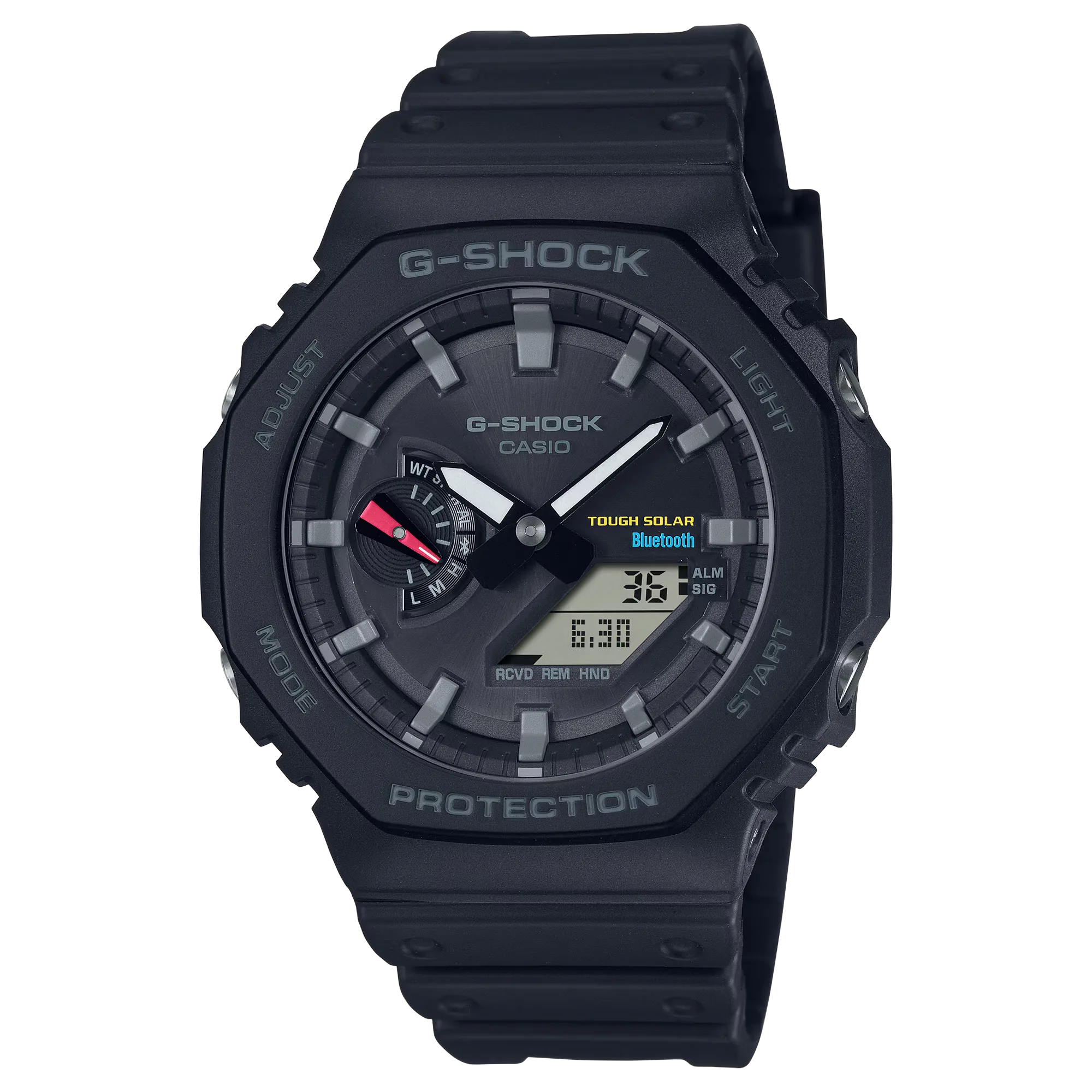
| GA-B2100-1A | $150 | Carbon/resin case; resin band | Mineral | Solar-connected everyday baseline |
| GM-B2100SD-1A | $600 | Stainless-steel case and solid steel bracelet | Mineral | Full-steel construction, bracelet and finishing |
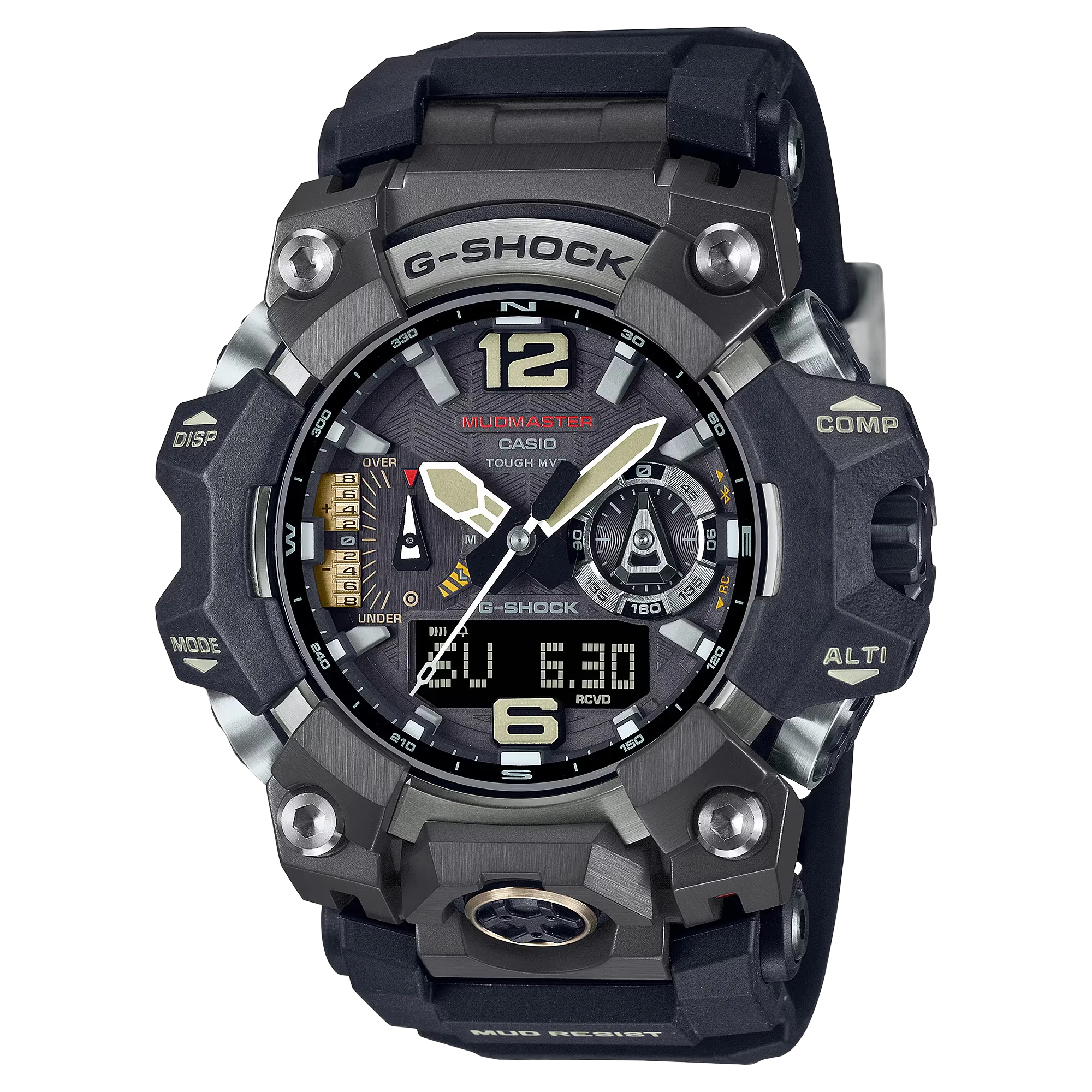
| GWG-B1000-1A MUDMASTER | $800 | Reinforced resin/steel construction; bio-based resin band | Sapphire with anti-reflective coating | Outdoor sensors, mud/vibration-resistant construction and additional protection details |
| MRG-B5000B-1 | $4,500 | Titanium-alloy construction and solid titanium-alloy bracelet; specialized top bezel | Sapphire with anti-reflective coating | Elaborate multi-part construction, specialized alloys and individually polished components |
The MR-G quote is 30 times the baseline quote. That doesn't establish 30 times the accuracy, useful functions or impact protection. Retail price isn't a manufacturing-cost breakdown: the examples show what differs in the finished watches, not how much each material or process contributes to Casio's margin.
The GM-B2100SD-1A moves from the baseline's carbon/resin case and resin band to a steel case, bezel and solid steel bracelet. It also has a screw-lock back and a one-touch three-fold clasp. Resin buffers remain between its case and bezel, so "full metal" doesn't mean every internal part is metal.
At the checked prices, the difference from the GA-B2100-1A (about $450) isn't the cost of obtaining solar power and Bluetooth — the baseline already has both. The more expensive watch still has mineral glass and the same stated 200-meter water rating.
That's a legitimate purchase if you want the steel object and bracelet. It isn't a necessary functional upgrade if you mainly need time, alarms and occasional timing. The wearing trade-off is substantial: the steel watch weighs 165 g and measures 49.8 × 44.4 × 12.8 mm, while the resin baseline is 52 g and 48.5 × 45.4 × 11.9 mm.
Try the bracelet sized before deciding. A narrower published case doesn't undo the weight increase, and a clasp's opening mechanism doesn't establish its adjustment range.
The GWG-B1000-1A MUDMASTER is a different kind of premium. It adds compass, relative-altitude, barometric-pressure and temperature readings, plus manufacturer-listed mud and vibration resistance. It also has sapphire glass with anti-reflective coating, Multi-Band 6 radio correction and Bluetooth.
The construction is more specific than a generic toughness label. Casio documents metal guards, gasket-equipped button shafts, a screw-lock crown intended to resist contamination, and αGEL at the sides and underside of the module for vibration resistance. Those are identifiable differences beyond the baseline's listed shock protection.
Buy it if those functions and construction details fit your activities. Don't buy it merely because the price suggests it must be the best everyday watch: its 58.7 × 52.1 × 16.2 mm case and 114 g weight make fit an important condition.
The sensors need judgment. Its altimeter calculates relative altitude from pressure, so Casio recommends calibration to known local elevation. The manual says the measurement functions are intended for general reference only and tells serious trekkers and climbers to carry another compass to confirm results. For ambient temperature, Casio says to remove the watch from your wrist to avoid interference from body temperature, perspiration and direct sunlight.
You're paying for additional capability, not a guarantee of professional navigation accuracy or permission to ignore the manual.
The MRG-B5000B-1 explains why an expensive G-SHOCK needn't be the one with the most outdoor measurements. This MR-G digital square has no listed compass, altimeter, barometer or thermometer functions; its distinction is largely the exterior and its construction.
Casio specifies Ti64 titanium alloy for the case, back cover and buttons; DAT55G titanium alloy for the band; and COBARION cobalt-chrome alloy for the top bezel. The black B reference uses a diamond-like carbon coating on the case and band. These aren't interchangeable descriptions of ordinary stainless steel.
The bezel alone contains 25 components. Casio says they're individually polished, with Sallaz polishing applied before assembly so recessed portions receive detailed finishing. Its Multi-guard Structure combines springs and silicone buffering with the multi-part bezel. That's an engineering response to assembling a polished premium exterior around a shock-resistant watch, not just a name printed on the dial.
Casio describes DAT55G as about three times harder than pure titanium and COBARION as about four times harder. Those are the manufacturer's material comparisons, not a measured whole-watch drop test or a promise that coatings can't be marked.
At 114 g, the MR-G is lighter than the selected 165 g steel bracelet model, despite its much higher price. Its 49.4 × 43.2 × 12.9 mm case is also a different shape and display format. Material names and weight can help explain a preference, but neither proves universal comfort.
Casio positions MR-G as its flagship line. Someone who values the individually finished case components, alloy bracelet, black coating and digital-square identity may reasonably want this exact object rather than an inexpensive substitute.
The useful distinction is between personal value and functional necessity. You don't need to invent an extreme-use requirement to enjoy an MR-G, but you also don't need to pay for its finishing to get dependable daily functions.
"Made in Japan" alone doesn't explain the whole difference here: Casio identifies both the selected steel GM-B2100SD-1A and the MR-G as made in Japan. Look at the actual construction and finishing, not one origin label or a flagship name by itself.
All four exact examples carry a manufacturer rating of ±15 seconds per month when their applicable phone/radio adjustment functions aren't used. Automatic correction is separate from that underlying rating: the baseline already has Bluetooth, while the MUDMASTER and MR-G add radio correction as another adjustment method.
The expensive MR-G has a 24-hour countdown, whereas the three selected analog-digital models have 60-minute countdowns. That's a usable difference, but it follows their particular modules and formats; it doesn't demonstrate that more money improves every specification.
Each example is rated to 200 meters. Additional mud/vibration protection on the MUDMASTER matters for a different reason, but it doesn't increase this published water rating.
Follow the exact manual. Casio's 20-bar guidance permits swimming but prohibits air-tank scuba diving and operating wet or submerged buttons or crowns.
Sapphire and specialized coatings are construction differences, not blanket damage guarantees. Casio's manuals still warn that strong impacts can cause malfunction. Solar cells need light and their capacity can deteriorate; bands, seals and exterior parts still need inspection and care.
Don't buy a premium model on an unsupported promise of lifetime batteries, fixed decades of ownership or guaranteed resale value. Ask about sizing and support for the exact reference, and try the watch before assuming a more expensive case fits better.
Best for: someone who wants solar charging, optional phone-assisted settings and ordinary daily timing without a steel bracelet or outdoor readings.
Why it works: the GA-B2100-1A already provides the central conveniences shared by the table examples. Watch-outs: mineral glass, a small digital panel and a 60-minute timer must suit you; app features need a compatible paired phone.
Best for: someone who specifically wants a full steel case and bracelet. Why it works: the GM-B2100SD-1A supplies that physical change while retaining solar and Bluetooth. Watch-outs: accept the 165 g weight, check bracelet fit, and recognize that it doesn't add sapphire or a higher water rating.
Best for: someone who will use its sensors, mud-resistant construction or vibration protection. Why it works: the GWG-B1000-1A has a concrete functional case for spending beyond everyday timing. Watch-outs: size, sensor calibration and the manual's reference-reading limits remain part of ownership.
Best for: someone who specifically appreciates the alloy construction, individual finishing and premium digital square. Why it works: the MRG-B5000B-1 offers documented construction and finishing that the baseline doesn't attempt. Watch-outs: the $4,500 quote is a luxury-sized commitment, not a route to a higher water rating or a sensor-equipped outdoor watch.
Choose the premium you can name: useful capability, a steel bracelet, or the particular MR-G construction and finish. If you can't identify a difference you'll use or enjoy, keep the simpler watch and the money.
Take the 10h09 quiz to find watches that match your budget, wrist fit, style and everyday priorities.
“A premium G-SHOCK can be a better-made object without being a necessary upgrade for your everyday timekeeping.”
Not necessarily. The selected steel GM-B2100SD-1A shares important electronic conveniences with the resin baseline but changes the exterior and bracelet. The MUDMASTER adds sensors and mud/vibration-resistant construction. The MR-G uses specialized alloys, sapphire, a multi-component polished bezel and different buffering. Compare the exact reference rather than assuming every premium is only a case swap.
The MRG-B5000B-1 has a documented 25-component bezel, individually polished parts, specialized Ti64/DAT55G/COBARION construction, sapphire and a black DLC treatment. Casio positions it as a flagship watch. Those facts explain what differs in the object; they don't reveal a factory cost breakdown or prove the full retail premium is necessary for accurate timekeeping.
All four selected references have the same ±15 seconds-per-month rating under their specified no-correction conditions. Bluetooth and radio correction can reduce time-setting intervention, but the baseline already provides Bluetooth. The high price isn't proof of a proportionate improvement in the underlying rating.
Not among these examples. The GWG-B1000-1A lists compass, altimeter, barometer, thermometer and additional mud/vibration-resistant construction. The MRG-B5000B-1, which costs far more, doesn't list those sensor functions. Choose the function set for your activity; still follow calibration and backup-navigation guidance.
This guide doesn't establish resale performance or future appreciation. Buy one because you want its verified functions, construction and design — not because its price or flagship label promises a financial return. The checked advertised prices are purchase observations, not valuation forecasts.
Understand the G-Shock 2100 families: resin, solar Bluetooth, metal-covered, steel bracelet and full metal, plus compact CasiOak alternatives.
October 2, 2026Steel, titanium, and ceramic cases wear, scratch, and cost differently. Here's how each material performs in daily use, and which style suits which case.
July 27, 2026Choose the right G-SHOCK for everyday wear, work, travel or outdoor activities. Compare four exact models, useful features and fit trade-offs.
October 6, 2026Compare compact G-SHOCKs by case size and band-compatibility range, including the GMA-P2100 and GMA-S2100, with practical advice on strap fit.
October 2, 2026Explore Casio G-SHOCK through its squares, 2100 designs and metal models. Understand the features, wrist fit and trade-offs before choosing yours.
October 2, 2026